Signs Of Life
Variable-channel video installation
Looped
2025
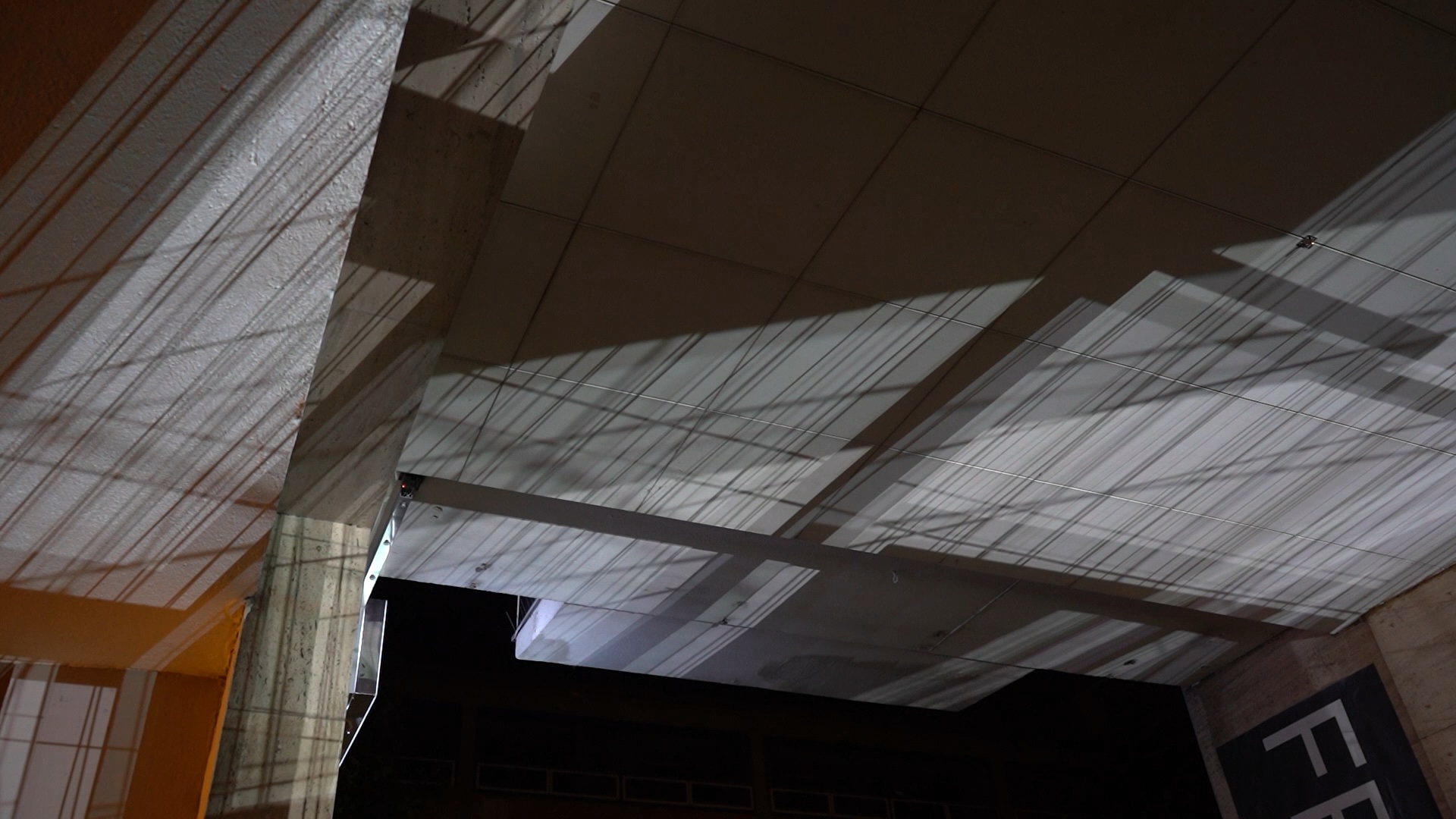
Installation documentation of three-channel installation as part of notes from oblivion at space n.n., Munich
Signs Of Life is a variable-channel looped projection made of asynchronous, slow pulsing white lights. The basis for the rhythm of the pulses is a patent filed by Apple when they were designing the pulse frequency for their sleep indicator on MacBooks, a patent that was filed in 2002 and in use until 2014. The initial goal was to demonstrate when a laptop’s hard drive had spun down, and was thus safe to move. The designers wanted to make the rhythm unobtrusive, and their approach was to base its speed on the average rate of human respiration. The sleep light was so popular that when it was discontinued due to no longer being necessary, consumers complained - the light mimicked respiration so gently that they felt they had lost someone.
The pulse rhythms used in Signs Of Life are, appropriately for something that was patented based on human physiology, “open source.” Taking the average human respiration rate of 12-20 breaths per second as a starting point, 52 videos were made, representing every possible duration between those two points (frequencies of 3-5 seconds). Each projection in the installation is individual - a randomized shuffle of the 52 videos. The projectors are meant to be placed on a floor or other surface next to one another in the exhibition, and to cast shadows of interior architecture, installation elements, and viewer’s bodies. Because the projections are always out of sync, and each projector has a different scale and white balance, and each beam of light casts a shadow from a slightly different angle, the projections create an uncanny shadow animation in which any surface all of the projections cast a shadow on becomes a screen.
/primary/notes from oblivion_03.jpg)
/primary/notes from oblivion_01.jpg)